The Five-Face Card Trap in Niu Niu
The five-face card hand in Niu Niu is the single most misunderstood mechanic in low-stakes live dealer bull bull, and it is exactly where the house edge quietly strangles your bankroll. Most players see five face cards and assume they are holding a monster. Wrong. In standard bull bull rules, a five-face hand usually means you are staring at a zero-point pile of garbage unless the dealer is even weaker. This is not luck — it is arithmetic, and the math does not care about your feelings.
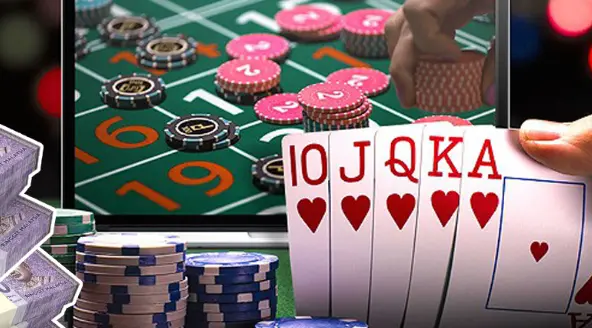
Why Face Cards Are Point-Dead in Bull Bull
Here is the brutal truth about Niu Niu Five Face Card Hand mechanics. In bull bull, every J, Q, and K carries a value of exactly ten points, which reduces to zero in the final modulo-ten calculation. A hand of J-J-Q-K-K sums to fifty, and fifty modulo ten equals zero. That is a Niu Niu with no bull. You lose to any hand that produces even a Niu One. The entire visual appeal of a face-card flush is a psychological weapon the casino uses against recreational bettors who never learned the reduction rule.
Veterans know this cold. When you see five painted cards on a low-limit live dealer bull bull table, you are not celebrating. You are praying the dealer also bricks out at zero and you push. That is the ceiling of your expectation. 🎯
The Low Limit Live Dealer Advantage Nobody Exploits
Low limit live dealer bull bull tables attract a specific breed of player: casual, distracted, and emotionally invested in face cards. This creates a soft pool of opponents whose betting patterns are predictable. The dealer shuffles through a physical shoe, and in most live dealer studios the penetration sits between fifty and sixty-five percent before the cut card triggers a reshuffle. That penetration window is your statistical playground.

Card counting in bull bull is not the same as blackjack, but tracking face-card density across a shoe gives you a measurable edge in side-bet decisions. When the shoe runs heavy with tens and faces, five-face outcomes become more frequent, and the zero-point disaster hands spike for everyone at the table. Smart players reduce bet sizing during high-face-density segments and press when low cards dominate the remaining deck.
Bankroll Math for Five-Face Disaster Hands
Run the variance. A five-face card hand in bull bull appears roughly once in every five hundred to seven hundred deals depending on shoe composition. It feels rare enough to be memorable, which is exactly why it mind-tricks players into overvaluing it. Your expected value on a zero-point bull bull hand against a random dealer hand is deeply negative. Against a dealer showing a low-card partial, it is catastrophic.
The fix is mechanical, not emotional. Cap your exposure on any hand that reduces to zero or one point. Treat face-heavy starting piles as a warning flag, not a green light. On low limit live dealer bull bull tables the stakes are small enough that discipline feels painless — until you run the numbers over five thousand hands and realize the leaks compound into a serious bleed. 💸
Exploiting Dealer Shoe Patterns
Physical cards in a live dealer bull bull studio do not shuffle uniformly. Dealer shuffle routines, cut card placement, and shoe-loading procedures create micro-patterns that a disciplined auditor can track. This is not mysticism. It is documented hardware behavior. When the same dealer runs the same shoe procedure across multiple sessions, clumping tendencies emerge that shift the probability distribution of five-face outcomes by two to four percentage points.
Track the shoe. Log the face-card clusters. Adjust your low limit live dealer bull bull bet spread accordingly. The edge is thin but it is real, and it is the only mathematically defensible reason to sit at a bull bull table where a five-face hand is a losing proposition dressed up as a winning one. 🃏
Final Technical Read on the Five-Face Trap
Reduction math kills the romance. Fifty modulo ten is zero, and zero loses to almost everything. The only counterplay is shoe tracking, disciplined sizing, and refusing to emotionally overpay for painted cards that carry no point value in the bull bull engine.